Fiber vs Cable Internet: Which is Better in 2025?
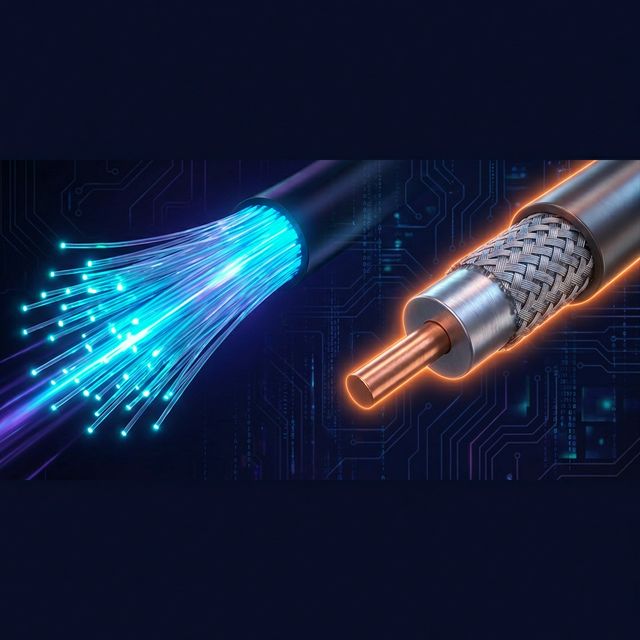
Choosing between fiber and cable internet is one of the most impactful decisions you can make for your home connectivity. In this guide, we break down every key difference to help you choose the right plan.
How They Work
Fiber Optic Internet
Fiber uses thin glass or plastic strands to transmit data as pulses of light. Because light travels incredibly fast, fiber offers the lowest latency and highest throughput available to residential users. Modern fiber lines can carry up to 10 Gbps and are essentially future-proof.
Cable Internet
Cable internet uses the same coaxial cables originally built for cable TV. It's widely available and capable of high speeds, but it's a shared medium — meaning you share bandwidth with your neighbors. During peak hours, this can cause noticeable slowdowns.
Head-to-Head Comparison
| Feature | Fiber | Cable |
|---|---|---|
| Max Download Speed | Up to 10 Gbps | Up to 1–2 Gbps |
| Max Upload Speed | Symmetric (same as DL) | 20–50 Mbps (asymmetric) |
| Latency | 1–5 ms | 10–30 ms |
| Reliability | Very High | High (but shared) |
| Price | $50–$90/mo | $40–$100/mo |
| Availability | ~45% of US | ~90% of US |
| Peak-Hour Slowdowns | Rare | Common |
When to Choose Fiber
- You work from home and frequently upload large files or video conference
- You have 5+ users on the same connection simultaneously
- You're a content creator or live streamer who needs high upload speed
- You want the most future-proof connection available
When Cable Internet is Fine
- Fiber is not available in your area
- Your household primarily browses, streams, and games (download-heavy)
- You're on a budget and want the best value
- Your ISP offers a DOCSIS 3.1 cable plan — speeds can reach 1 Gbps down
Test What You're Getting
Regardless of what you're paying for, always verify your actual speeds with a real test. Head to Speedtest and run a test right now to see if your ISP is delivering what was promised. If your real speeds are significantly lower than advertised, it may be time to call your provider or switch.