Ethernet vs. Wi-Fi: Which is Best for Speed?
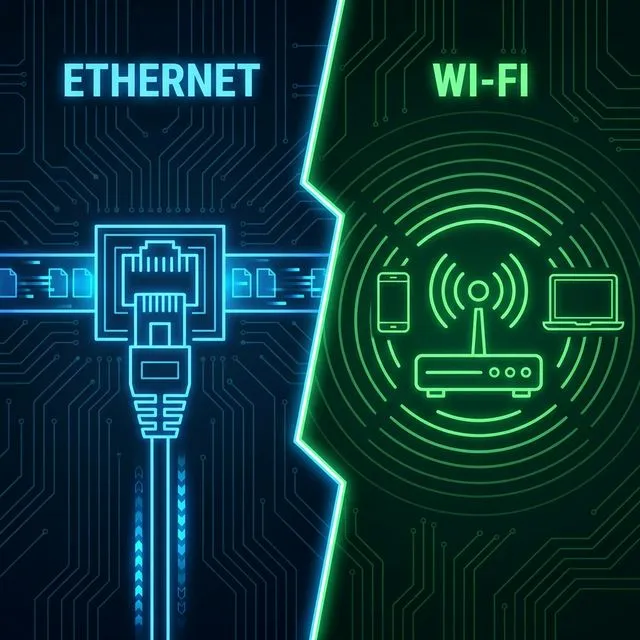
The Eternal Battle: Wires vs. Waves
In the modern smart home, Wi-Fi is the undisputed king of convenience. But for power users—gamers, streamers, and remote workers—the trusty Ethernet cable remains a staple. Why?
The Case for Wi-Fi
Wi-Fi 5 and Wi-Fi 6 have brought wireless speeds into the gigabit era. In a perfect environment, a Wi-Fi 6 router can easily push 800 Mbps to a compatible smartphone or laptop. It's more than enough for 4K streaming and general browsing. The obvious advantage is mobility; you can test your speed from the couch, the bed, or the patio.
However, Wi-Fi is heavily susceptible to interference. Walls, microwaves, other Wi-Fi networks (especially in apartment buildings), and distance all degrade the signal quality exponentially.
The Unbeatable Reliability of Ethernet
An Ethernet connection (specifically Cat 5e, Cat 6, or Cat 6a cables) provides a direct, insulated copper pipeline from your router to your device. This means zero interference.
- Lower Latency: Ethernet consistently provides lower ping and zero jitter, making it mandatory for competitive gaming.
- Consistent Speed: If you pay for 1 Gigabit internet, a wired connection guarantees you will receive those speeds consistently, whereas Wi-Fi speeds drastically fluctuate.
- Security: It is significantly harder to intercept data over a physical cable than over broadcasted radio waves.
The Verdict
If a device is stationary (like a desktop PC, smart TV, or game console), always wire it with Ethernet. Reserve your Wi-Fi bandwidth for mobile devices like smartphones, tablets, and smart home IoT gadgets.